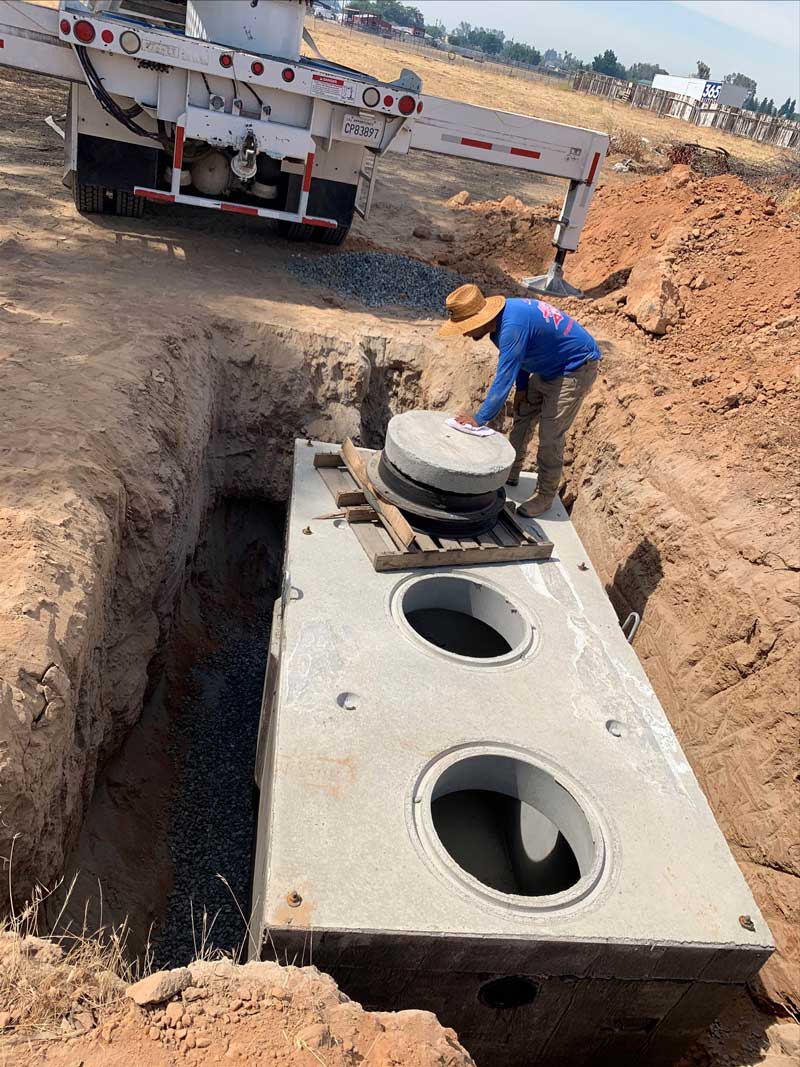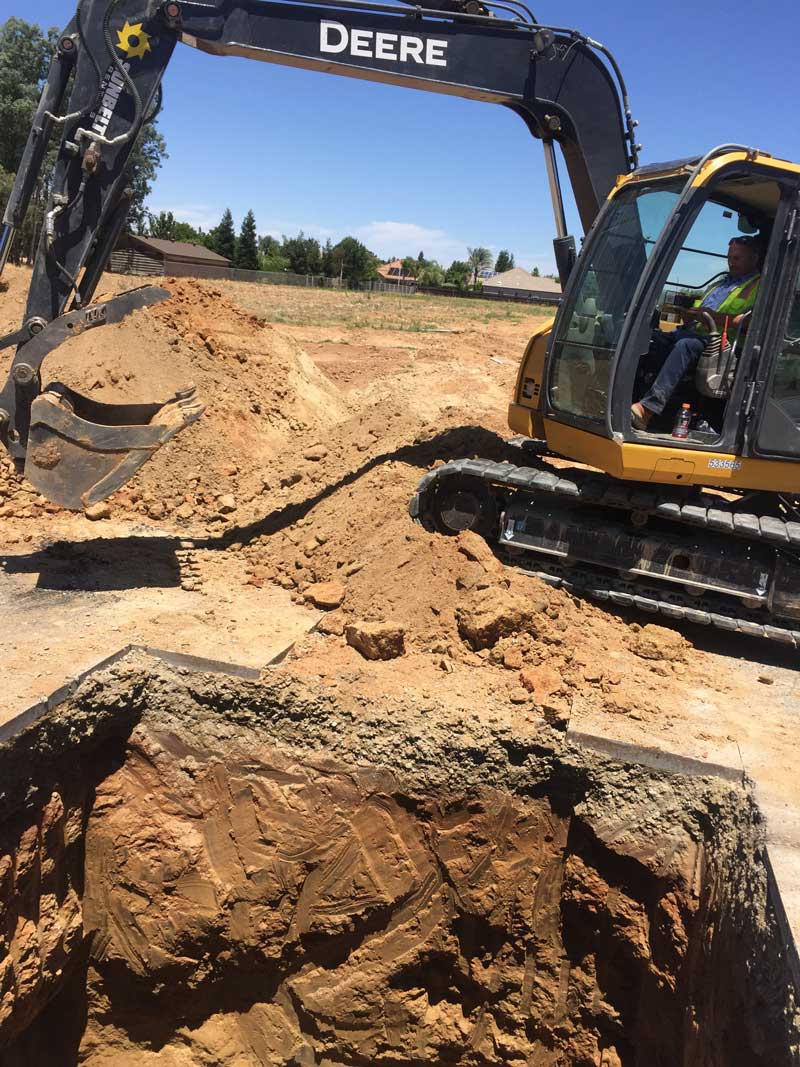
Digging for a new septic tank installation in Fresno, California.
What is a septic tank system?
A septic tank system is an independent sewage system unique to individual properties. It is the entire mechanism of removing wastewater and sewage from homes and businesses. The septic system is an individual piping network that carries wastewater and sewage from residences. Septic systems are primarily underground though there some visible above-ground features of the configuration.
A septic tank system is maintained by property owners and not maintained by local City Sewer Maintenance Divisions as found in urban areas like the cities of Fresno, Clovis and Madera.
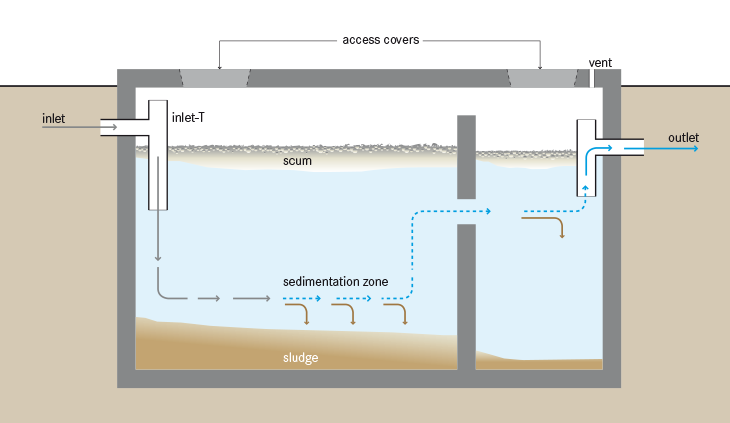
"File:Schematic of a septic tank 2.png" by Tilley, E., Ulrich, L., Lüthi, C., Reymond, Ph., Zurbrügg, C. is licensed with CC BY-SA 4.0.
How does a septic system work?
Wastewater and sewage are carried from the residence or building through an inlet pipe that drains the contents into the septic tank.
Eventually the contents of the septic tank separate due to bacterial decompensation. When this process occurs, what is referred to as sludge submerses to the bottom of the septic tank while a layer of grease lifts to the top. The top layer is referred to as scum.
The middle section of the contents in the septic tank is referred to as effluent. Effluent is the wastewater or graywater that exits the septic tank through an outlet pipe and drains into the leach fields which filter out any last sediment in the wastewater. The effluent then drains into naturally existing soil where it continues its microbial decomposition. A percolation test ensures the wastewater drains sufficiently. Septic systems are mostly underground though there some above-ground visible features of the configuration.
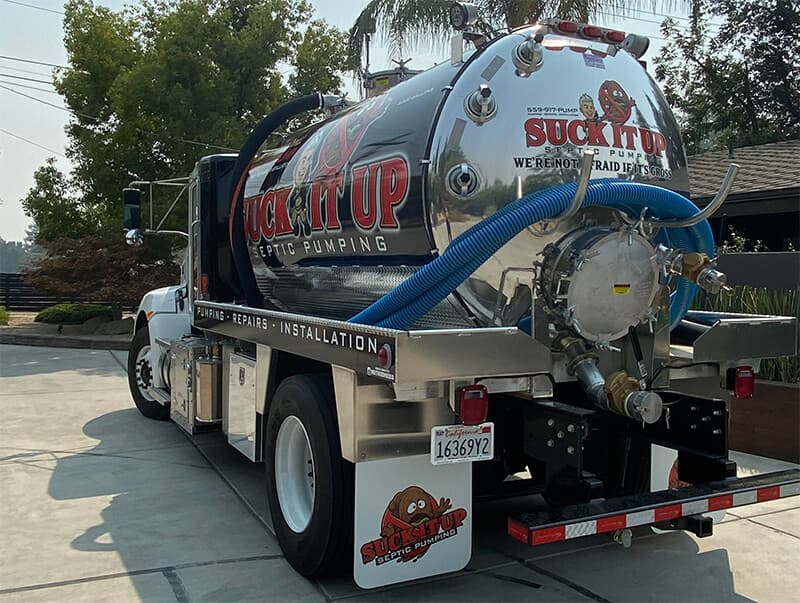
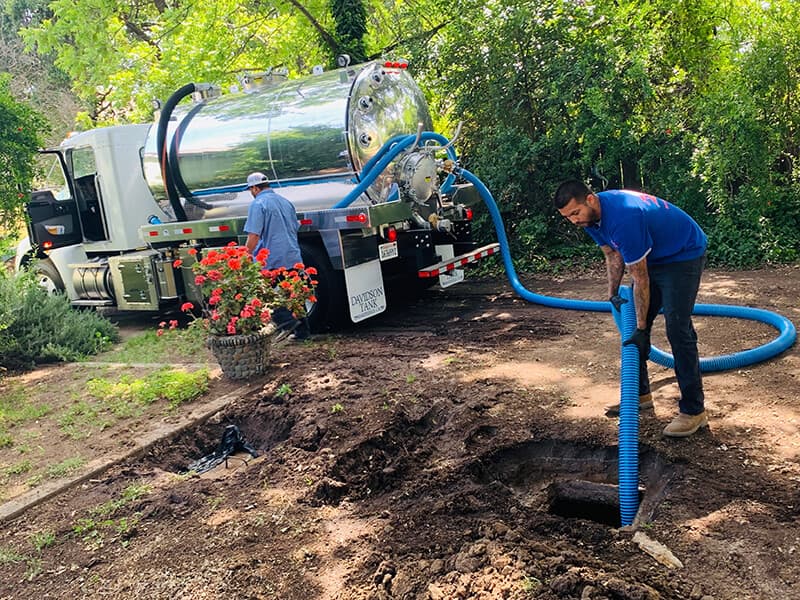
Septic Tank Pumping Truck
How does septic tank pumping work?
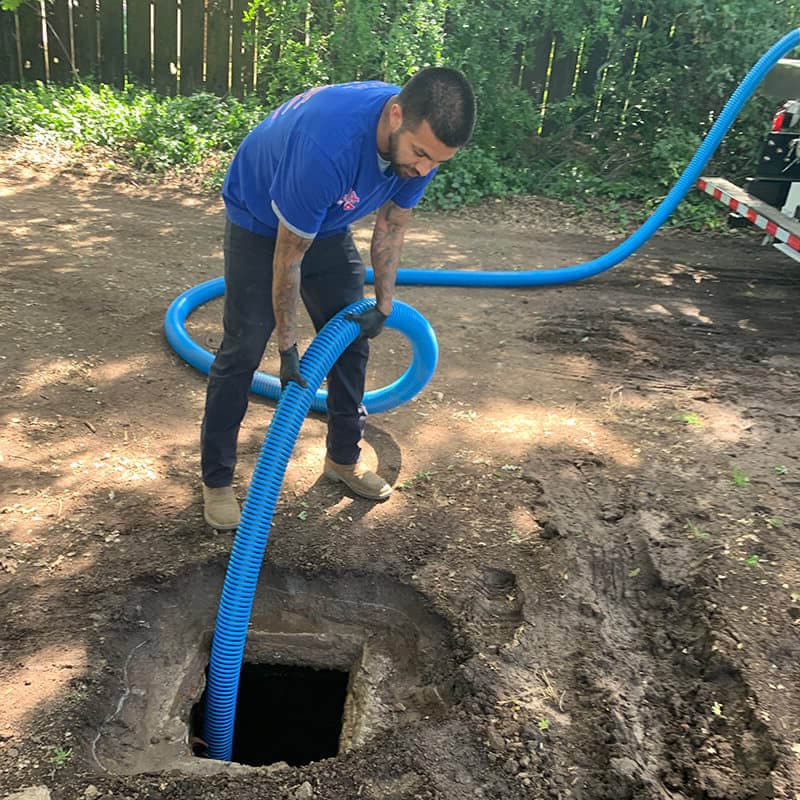
Septic tank pumping starts with identifying the access point of the septic system. It will need to be exposed, which can be done by you or the technician who is servicing the septic tank. Most companies will charge an additional fee for the added labor of exposing the access point because it can include a great deal of digging. Some homeowners choose to save on septic pumping cost by doing the digging themselves.
There are specialized trucks designed exactly for the purpose of septic tank pumping. A septic pumping company will come out with a large truck that has a storage tank situated on the back of it in which the contents of your septic tank get transported.
The septic pumping truck has a large vacuum hose. The septic pumping hose is connected to the outlet pipe at the exposed access point. Sludge is sucked up into the storage tank on the truck through a vacuum hose, though it's recommended that a full septic cleaning and inspection be conducted at the same time. The contents are then delivered to your local wastewater treatment facility.
During the inspection, the expert on site will check the conditions of the piping and identify whether any septic maintenance is needed. Usually running a hydro jet through the septic piping clears any grease and debris build up. A sewer line camera should be run through the septic system as part of the septic inspection.
Knowing that your septic system is in proper working order will bring peace of mind to responsible businesses and homeowners who schedule an inspection.
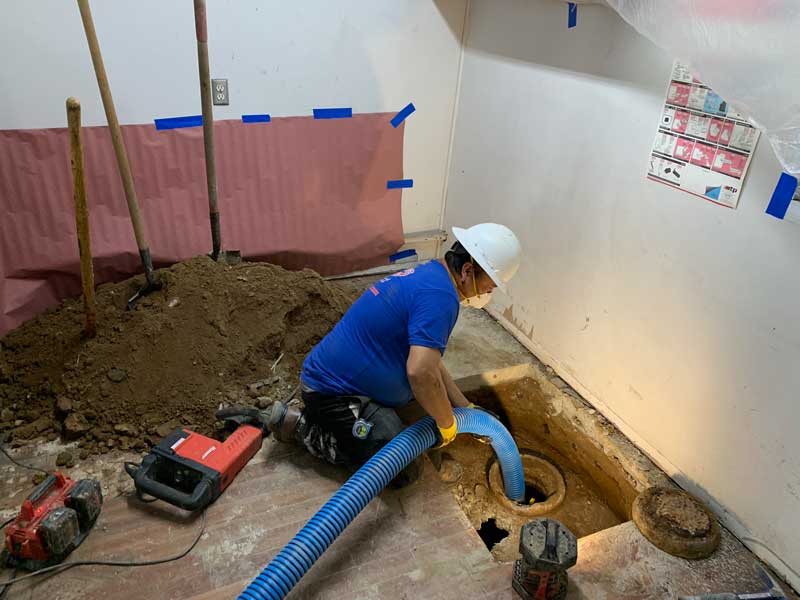
Your contractor will reccomend a septic tank pumping schedule.
How often should a Septic system be pumped?
There are a variety of factors that determine the frequency in which septic tank pumping should occur. An average tank should be pumped every 3-5 years. Some aspects that make the duration vary is the tank size as well as the quantity of household members. Households of larger sizes are more likely to require septic tank pumping more often.
Septic tank pumping should occur when the tank is at 30% - 50% capacity.
How do I choose a septic pumping company?
Septic tank pumping companies near me can be identified in any online search platform, through your homeowner's insurance or by word of mouth. Choosing the right septic tank service professional doesn't need to be a stressful process.
Only the consumer can really decide what company is best to service their septic system. Some thoughts to consider might include:
- Is the septic company licensed, bonded & insured?
- Is the septic company locally owned and operated?
- What sort of reviews do customers leave for the septic service business?
- How many years of experience do they have?
- Is the septic tank pumping affordable?
- Do they offer free estimates?
- Is the septic company located near me?
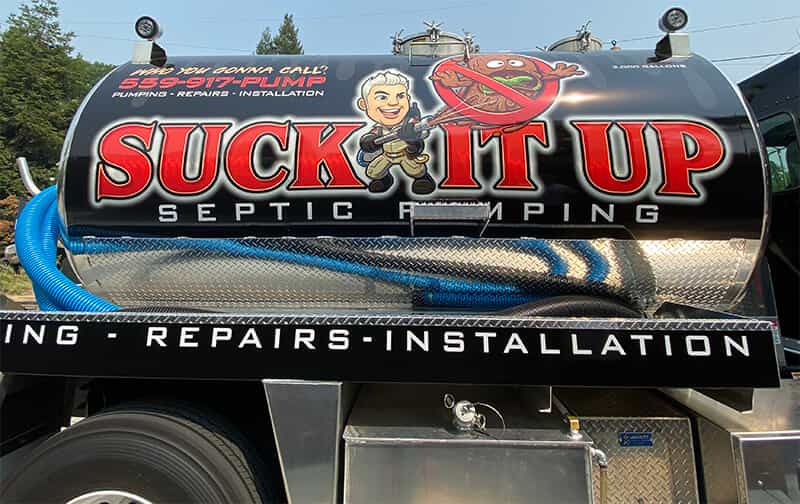
Septic tank pumping near me.
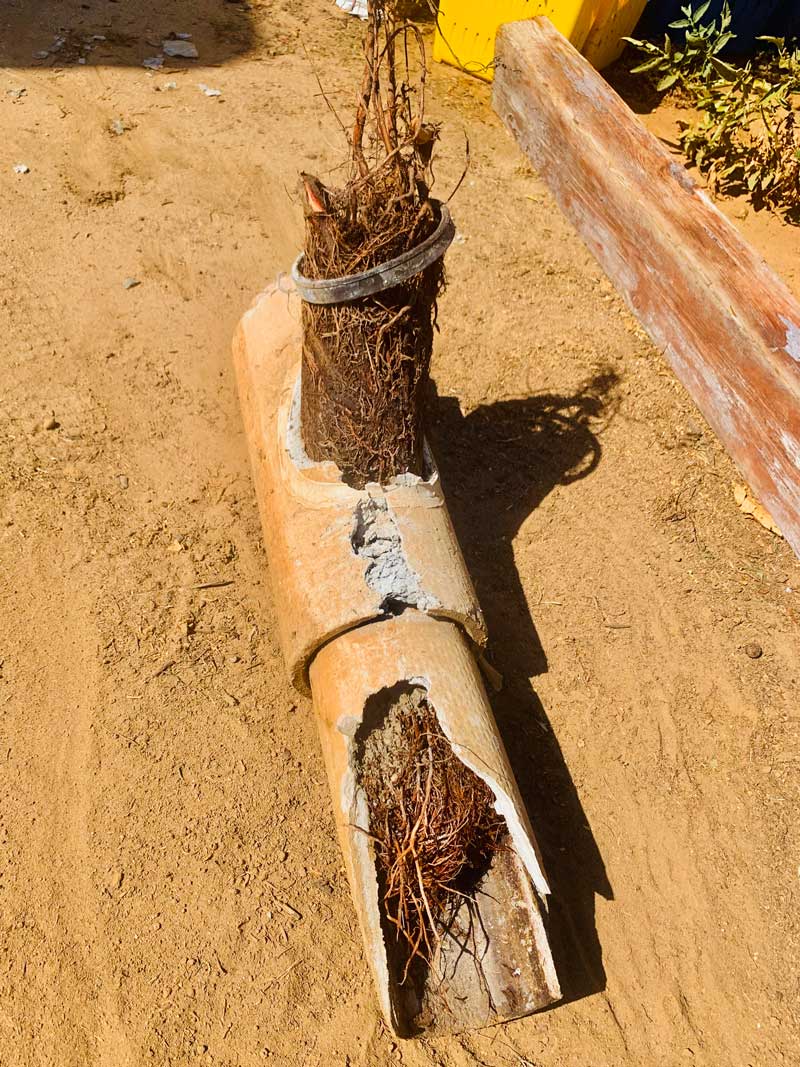
Septic system repair showing root intrusion.
How long will a septic tank system last?
With regularly scheduled maintenance and inspections, a well-maintained septic tank system can last for years and years. Septic tank pumping should occur routinely. Avoid introducing septic tank additives to your septic tank.
Septic tank systems should not be neglected. If issues with the septic system are overlooked, it can end up leading to more costly repairs and to the entire septic tank system failure. In severe cases, entire septic systems can require complete replacement in a manner of years. To avoid the deterioration of your septic system, make sure you schedule regular septic tank pumping and septic tank inspections.
Tips for Maintaining a Healthy Septic System
- Do not introduce unnatural substances into the septic system such as household cleaning products. The chemicals are harmful to the naturally occurring ecosystem.
- Use all-natural cleaning products such as vinegar water.
- Only flush toilet paper and wastewater.
- Try not to use a garbage disposal at the kitchen sink. Put food waste into the garbage.
- Refrain from adding organic & inorganic additives that claim they assist with the decomposition of sewage.
- Items such as baby wipes, feminine hygiene products, napkins and diapers should be thrown away in the garbage rather than draining to the septic tank. Even "flushable" wipes can cause harm.
- Maintain regularly scheduled septic tank pumping and inspections.
- Keep an eye on your septic system and be aware of warning signs of potential emergencies.
- Refrain from allowing dripping faucets and continuously running toilets. You want to avoid excessive water use / draining into the septic system. It will reduce the rate the tank reaches fill lines / maximums. One way to do this is to shower quickly and refrain from allowing the water to run while brushing teeth or other tasks.
Ultimately it is up to you to make sure your septic system function is in proper working order. The more you familiarize yourself with your septic system, the easier it is to notice if anything is awry. It is exceptionally beneficial for first time septic system owners to know the answers to the how's and why's and what's. Welcome to the world of septic!
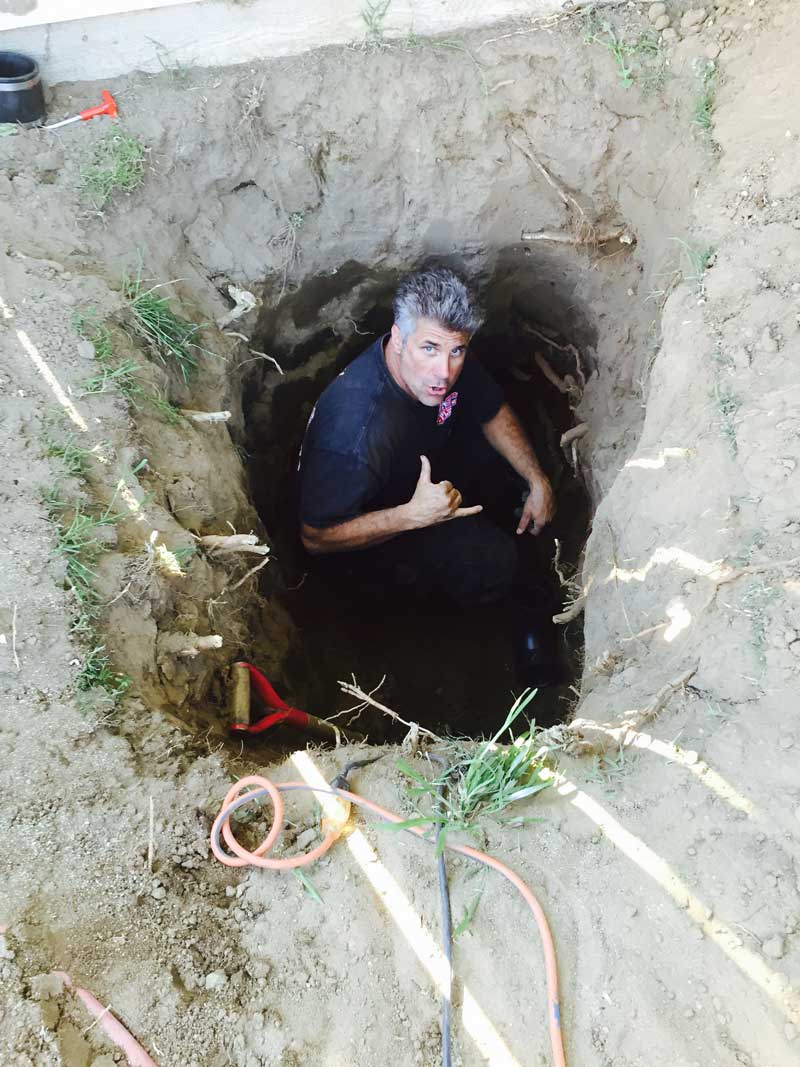
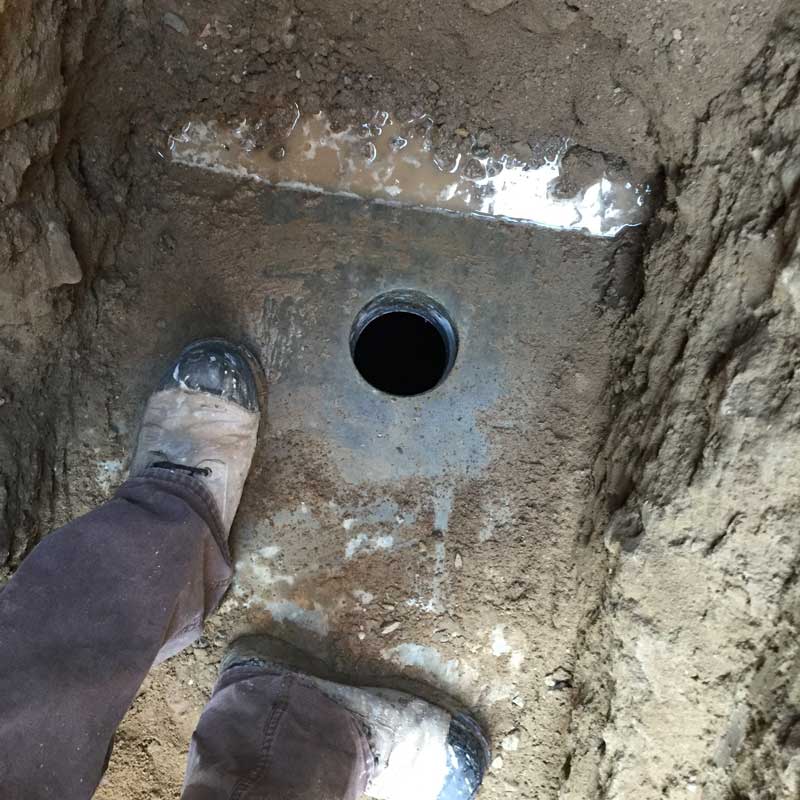
Septic system inspections digging deep.
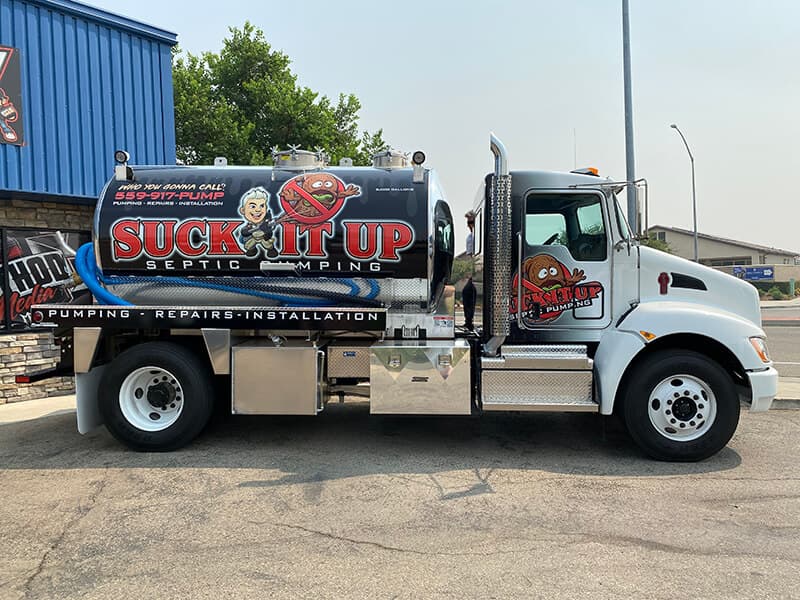
Consult a specialist about aerobic septic systems.
What is an aerobic septic system?
Traditional septic systems rely on the production of naturally occurring anaerobic bacteria and waste, which in the absence of oxygen help with the breakdown of sewage. An aerobic septic system introduces oxygen into the waste of the septic tank. This encourages the growth of aerobic bacteria, which aid in the decomposition of wastewater and solids.
Aerobic systems have the following advantages:
- Smaller leach field is required. This can be helpful on land with less space.
- Cleaner effluent (wastewater that is introduced to leach fields).
- Faster breakdown of household waste.
Disadvantages:
- Higher initial cost.
- Requires use of electricity for pumps that introduce oxygen.
- Increased maintenance costs compared to traditional septic systems.
- May not be allowed in all municipalities.
Before installing an aerobic system, make sure to weigh the advantages and disadvantages to make an informed decision as a homeowner.